Blog
-
September 21, 2026
Machine Settings, Drying Tips & How to Keep Sweatshirts Soft | Wash After Wash
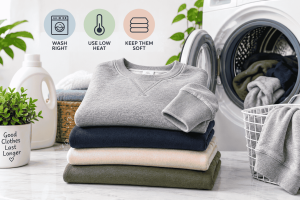
Knowing how to wash a sweatshirt properly is the difference between a piece that still looks and feels new after fifty washes and one that's faded, pilled, and shrunken after five. Most of the damage done to sweatshirts happens in the laundry room, not from everyday wear — the wrong water temperature, an overloaded dryer, or the wrong detergent can undo a good sweatshirt fast.
-
September 14, 2026
Walk into any retail store or scroll through any streetwear feed right now, and you'll notice the same handful of names showing up again and again. Some of that is genuine quality — fabric weight, construction, fit — and some of it is pure brand recognition. Either way, knowing the actual best sweatshirt brands makes shopping easier, whether you're buying one for yourself or sourcing in bulk.
-
September 10, 2026
A sweatshirt is one of the few pieces that works equally well on a lazy Sunday and, styled right, in a genuinely put-together outfit. The difference between those two results almost never comes down to the sweatshirt itself — it comes down to how to style a sweatshirt for the specific occasion, fit, and pairing you're going for. This guide walks through styling by construction, by occasion, and by color, so whatever's actually in your closet, you'll know exactly how to wear it.
-
September 07, 2026
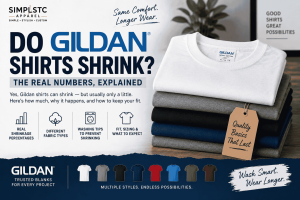
Most Gildan shirts are pre-shrunk — meaning the cotton is treated with heat and moisture before it's ever cut and sewn into a shirt. That process significantly reduces shrinkage, but it doesn't eliminate it completely. Depending on the fabric, a Gildan shirt can still shrink a small, fairly predictable amount after its first wash.
-
September 07, 2026
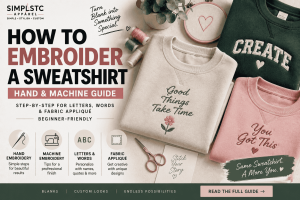
Step-by-Step for Letters, Words & Fabric Appliqué | Beginner-Friendly
A plain sweatshirt is basically a blank canvas — and once you know how to embroider a sweatshirt, you can turn any blank into a custom piece with a name, a word, a monogram, or a full design. This guide walks through both major approaches — hand embroidery and machine embroidery — plus the specific techniques for lettering and fabric letter appliqué, so you can pick the method that actually fits your project and skill level.
-
September 04, 2026
The core difference between sweater vs sweatshirt comes down to how the fabric is made. A sweater is knitted — yarn looped together, like something off a knitting needle, even when it's machine-made at scale. A sweatshirt is a cut-and-sewn garment made from a knit fleece fabric, built more like a t-shirt than a hand-knit piece.
That one construction difference is where almost every other distinction — warmth, texture, formality, and how each one fits into an outfit — actually comes from.
-
September 02, 2026
Pick up a Carhartt hoodie in a store and there's a decent chance you'll flip the collar over, half-expecting to see "Made in USA" stitched in. It's a fair instinct — Carhartt built its reputation on American workwear, and the brand still leans into that heritage in every ad and every catalog photo. But the honest answer to where is Carhartt made is more layered than a single country, and knowing the real story actually helps you shop smarter.
-
September 02, 2026
Stand in front of your closet on a chilly morning and you'll probably reach for a sweatshirt without thinking twice. But not all sweatshirts are built the same — the one you throw on for a coffee run isn't the one you'd wear to a client meeting, and the one you layer for a fall photo isn't the one you'd wear to the gym. Understanding the different types of sweatshirts actually available is the difference between a closet full of near-duplicates and a wardrobe that works for every occasion.
-
August 18, 2026
Quick answer: The best tote bag decoration methods are fabric paint and stenciling (easiest, no tools needed), iron-on vinyl (clean, precise designs), screen printing and DTF printing (best for bulk or photo-quality designs), and embroidery (most durable, most premium). Plain 100% cotton canvas tote bags take decoration best — heavier 10oz+ canvas holds paint and stitching without warping.
-
August 18, 2026
Quick answer: GSM stands for Grams per Square Meter — it's the standard unit used worldwide to measure fabric weight and density. A higher GSM means a heavier, thicker, more durable fabric; a lower GSM means a lighter, more breathable one. In clothing, GSM typically ranges from under 100 GSM (sheer, lightweight fabrics) to 300+ GSM (heavyweight hoodies and outerwear). Most standard cotton t-shirts fall between 140-200 GSM.


Need Help?
Get in touch with our experts.