Monthly Archives: July 2026
-
Posted: July 28, 2026Categories: GuideRead more »
Quick answer: The 5 main ways to print t-shirts are screen printing (best for volume + durability), DTF printing (best for full color + low qty), DTG printing (best for one-offs), heat transfer vinyl (best for home DIY), and sublimation (best for all-over prints on polyester). The right method depends on your quantity, design complexity, fabric, and budget.
-
Posted: July 28, 2026Categories: GuideRead more »
Quick answer: 100% polyester shrinks very little — typically less than 1% under normal washing and drying conditions. Polyester fibers are thermoplastic (heat-set synthetic fibers) that resist shrinkage far better than natural fibers like cotton. However, polyester CAN shrink when exposed to very high heat — hot dryer settings, boiling water, or industrial laundering. The fabric doesn't shrink the way cotton does; it can distort, stretch out of shape, or melt under extreme heat instead.
-
Posted: July 28, 2026Categories: GuideRead more »
Quick answer: The most reliable clothing color combinations are: navy + white, black + camel, grey + burgundy, olive + tan, blush + grey, and any neutral (black, white, navy, grey, tan) paired with any other neutral. The safest rule: choose one bold or bright color and pair it with one or two neutrals. The most universally flattering color is navy blue — it works with almost every other color in the spectrum.
-
Posted: July 28, 2026Categories: GuideRead more »
Quick answer: The 10 most popular jacket types are: bomber jacket, puffer jacket, denim jacket, leather jacket, rain jacket, fleece jacket, varsity/letterman jacket, military jacket, windbreaker, and softshell jacket. Each serves a different combination of weather protection, formality, and aesthetic.
-
Posted: July 28, 2026Categories: GuideRead more »
Quick answer: The main types of pants are jeans, chinos, dress pants/trousers, cargo pants, joggers, athletic pants, yoga pants, sweatpants, khakis, linen pants, corduroy, wide-leg, and straight-leg pants. Pants are classified by fabric, fit, rise, and occasion. Knowing which type fits which situation is the foundation of dressing well — or choosing the right wholesale uniform program.
-
Posted: July 27, 2026Categories: Guide
 Read more »
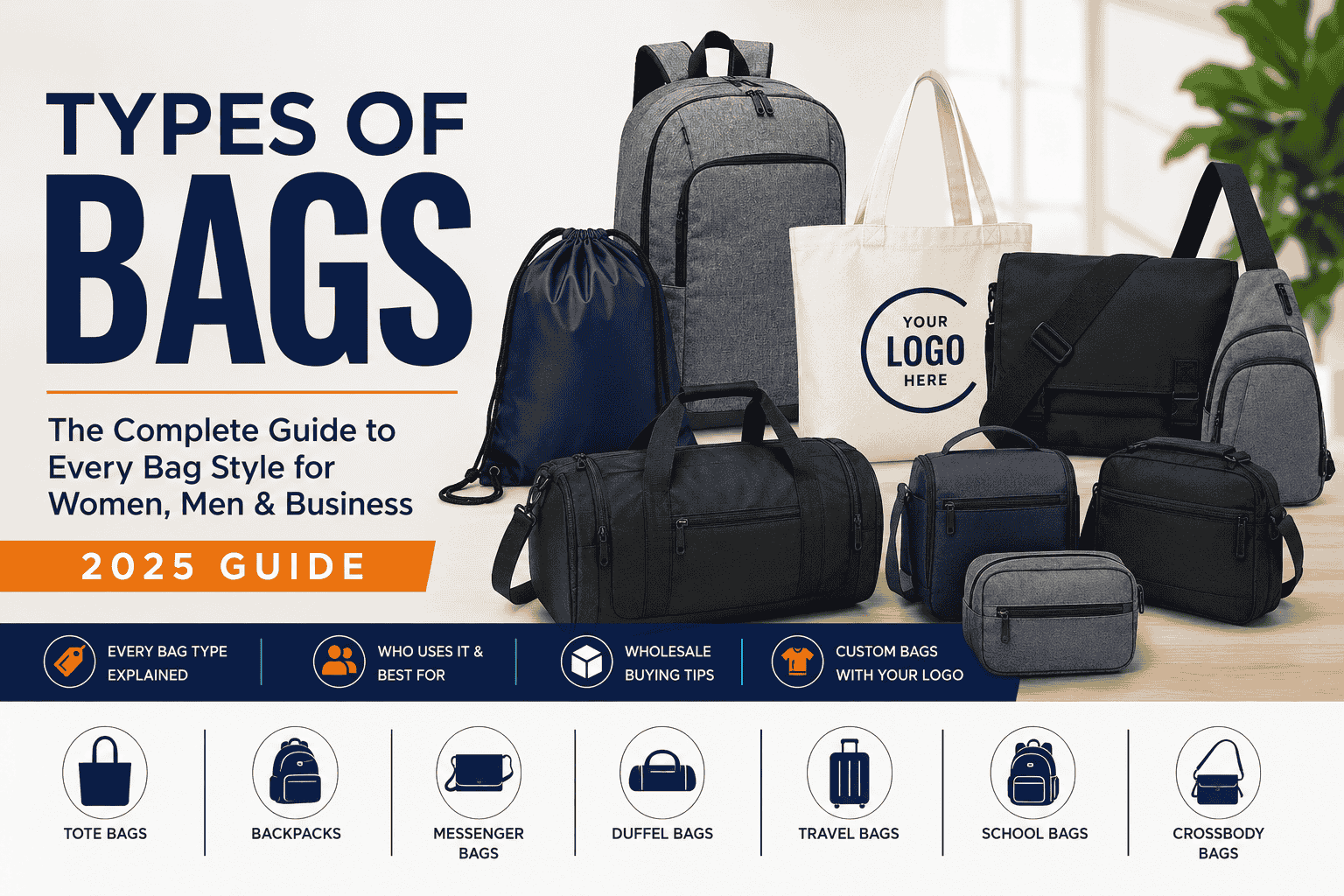
Bags are the most universally useful category in the wholesale apparel market — and also the most confusing to buy for. Every buyer faces the same question: with dozens of distinct bag types across construction, capacity, carry style, and use case, how do you know which type is right for your program, your customer, or your inventory?
-
Posted: July 27, 2026Categories: Guide
 Read more »
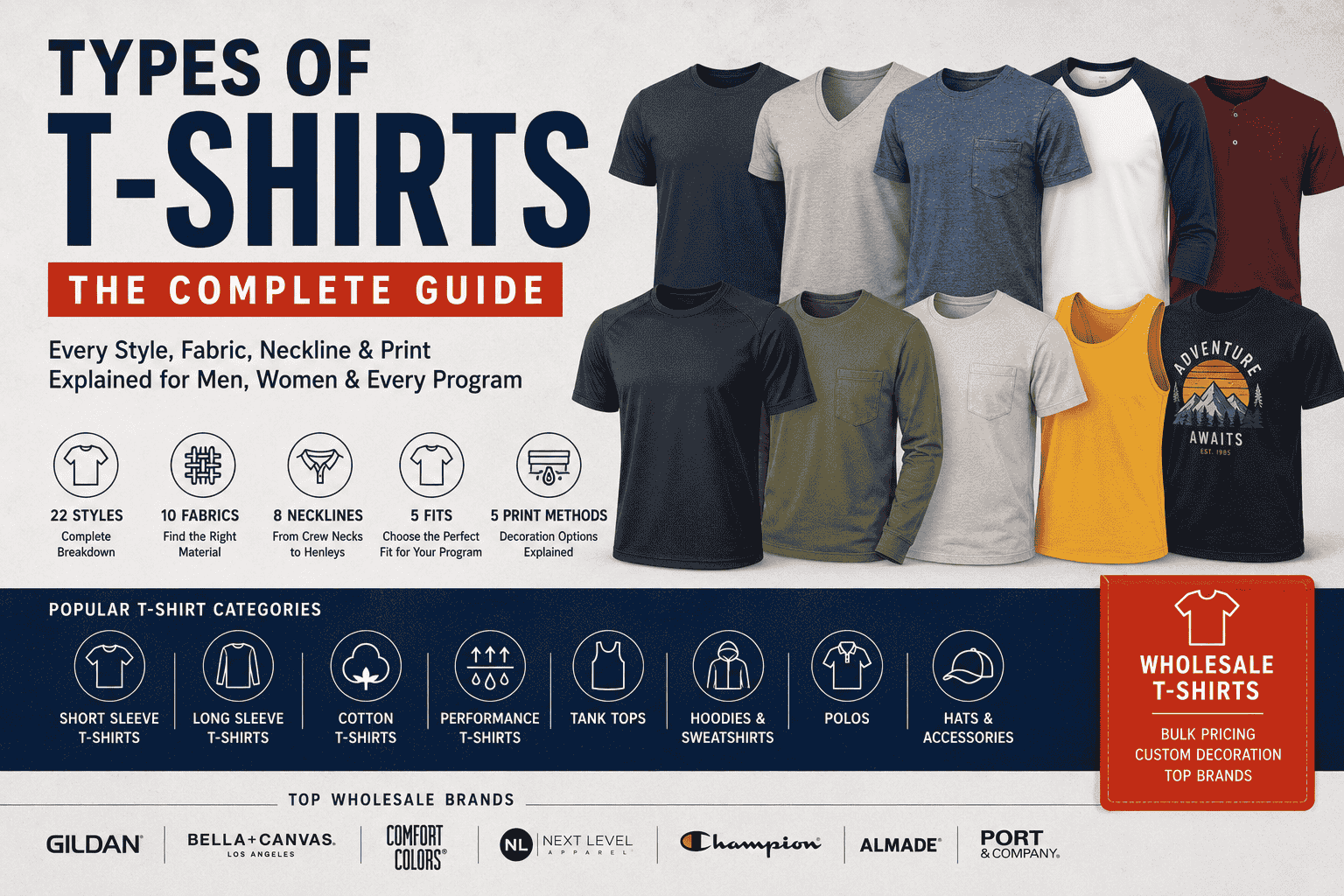
The t-shirt is the most universal garment in human clothing history — worn by virtually every person on the planet, across every culture, in every climate, for every occasion from manual labor to black-tie casual. And yet 't-shirt' covers an enormous range of distinct products: different constructions, different fabrics, different necklines, different fits, different sleeve lengths, and different print methods — each serving a different purpose, a different audience, and a different program.
-
Posted: July 27, 2026Categories: Guide
 Read more »
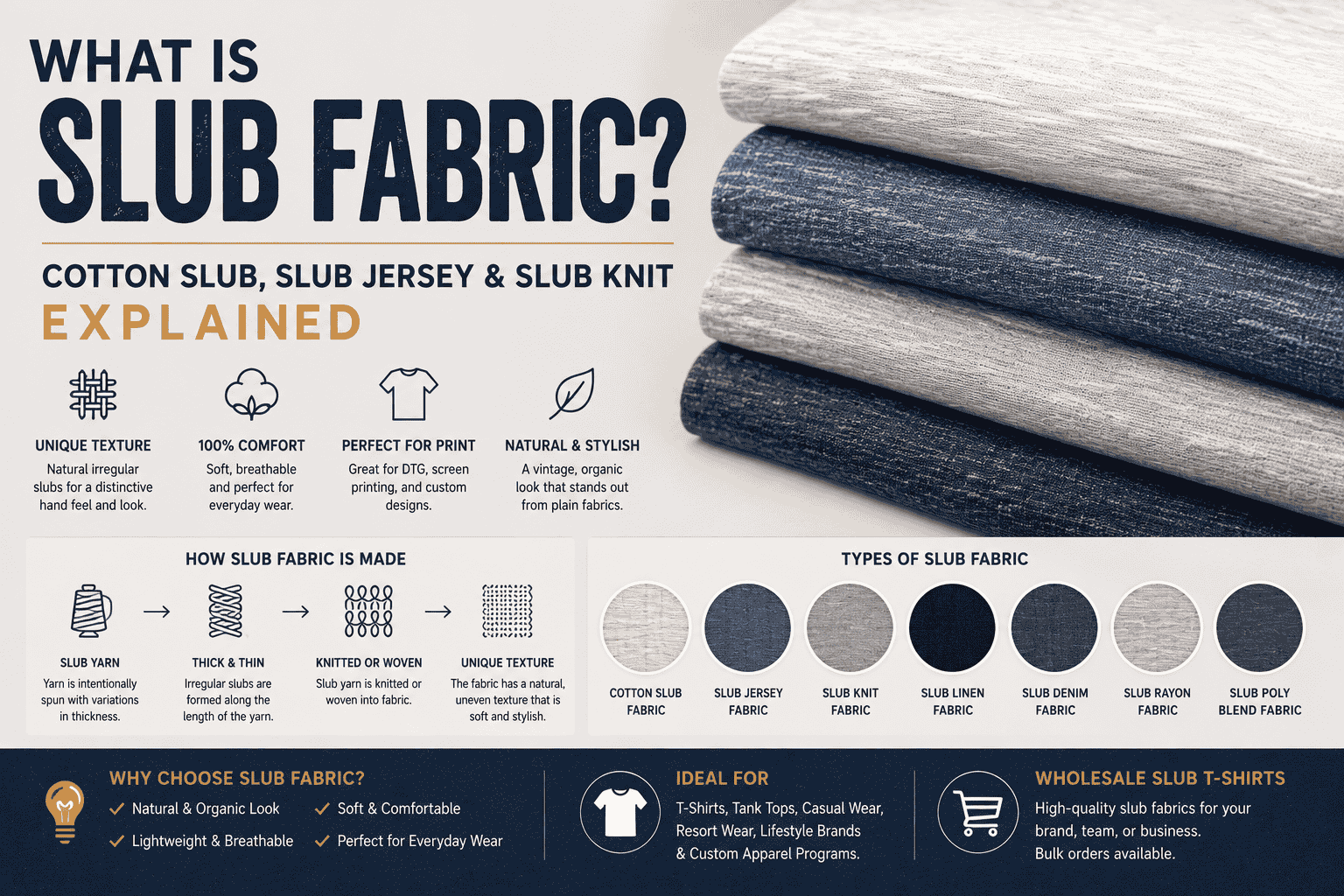
Quick answer: Slub fabric is a textile made from yarn with intentional thick-and-thin variations along its length — producing a naturally irregular, textured surface with subtle bumps and ridges. The word 'slub' refers to a lump or irregularity in yarn. Slub fabric is not defective. The texture is a deliberate design choice that creates a vintage, handcrafted, and organic aesthetic.
-
Posted: July 27, 2026Categories: Guide
 Read more »
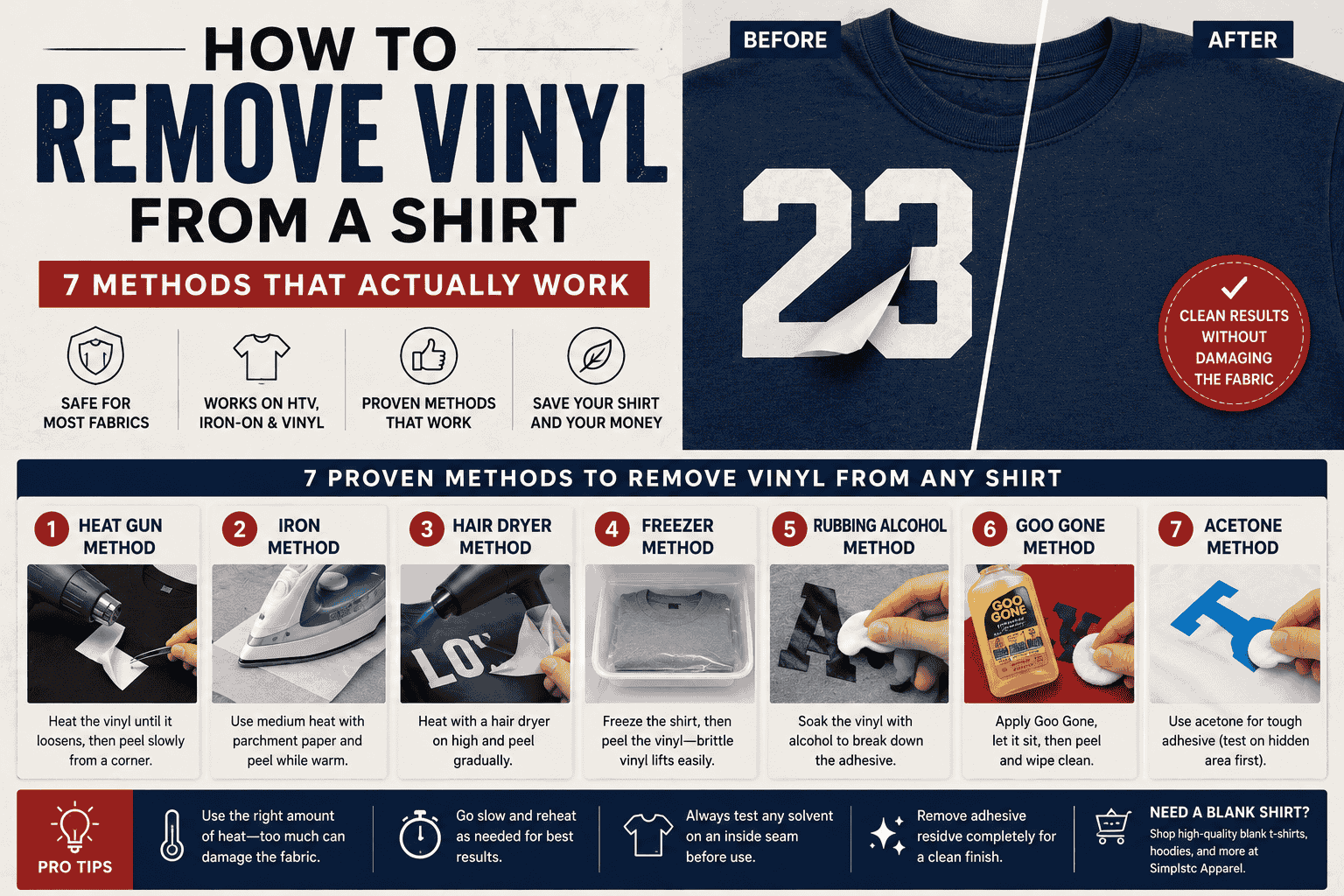
Quick answer: The best way to remove vinyl from a shirt is heat. Use a heat gun or hair dryer to warm the vinyl until it loosens from the fabric, then peel from a corner using tweezers or your fingernail. Work slowly and reheat as needed. For residue, rubbing alcohol or Goo Gone removes adhesive without damaging most fabric types.
-
Posted: July 27, 2026Categories: Guide
 Read more »
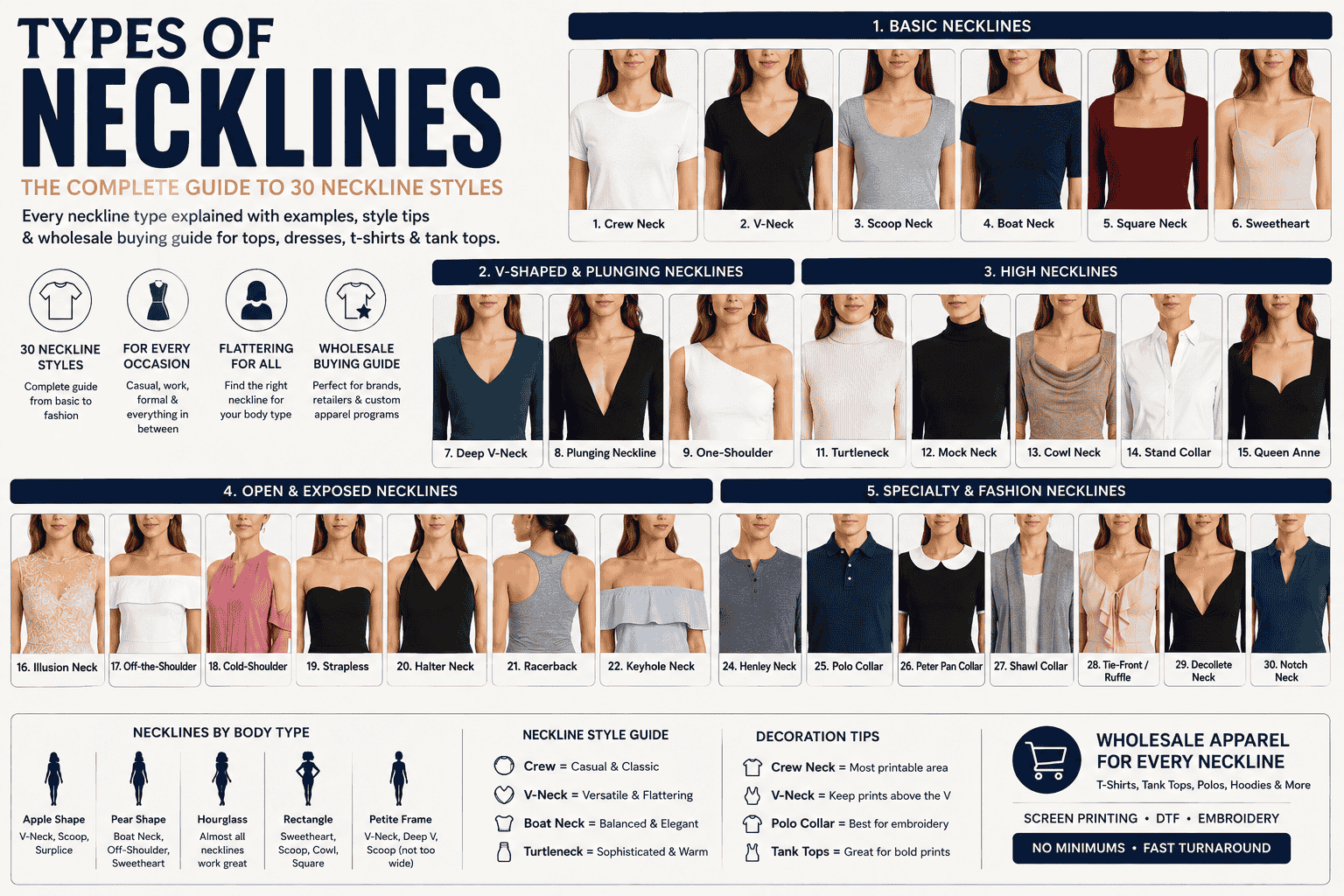
The neckline is the single most visible design element on any top or dress — it frames the face, defines the silhouette, establishes the formality level, and shapes what the garment communicates about the wearer before they have said a word. Get the neckline right and every other element of the outfit falls into place. Get it wrong and no amount of great fabric, color, or print recovers it.

Need Help?
Get in touch with our experts.